
Navigating the Complexities of Brand Portfolio Management
At a recent conference I attended, a frequent topic kept coming up. A business would be acquiring another company, but they were not sure how to integrate the newly acquired brand into their existing portfolio. Brands can be acquired for numerous reasons — increasing market share, expanding capabilities, accessing new tech/innovations or markets, and eliminating competitors.
Organizations can become so fixated on growth that they often neglect one of the most integral aspects of a successful acquisition, brand portfolio strategy. There are many different approaches to consider when managing newly acquired brands. Determining the best strategy depends heavily on the acquired brand’s equity.
These are some questions to ask before determining the strategy:
- Is it a legacy brand with a loyal following and rich history?
- Is it a new brand with attractive or innovative products but not much equity in the brand itself?
- How does the brand differ from its competition?
- Will the brand require a significant investment, or would it be more beneficial to maintain the name or roll it into another brand?
To answer these questions, it’s helpful to facilitate a Strengths, Weaknesses, Opportunities and Threats (SWOT) analysis. Conducting an analysis like this will create a strategic road map for your newly acquired brand. To learn more about the SWOT analysis process, check out our write-up HERE or reach out to the Jump team for more information.
Once you’ve done your due diligence and analyzed the SWOT findings, it’s time to focus on how to manage this new brand within your portfolio. There are four primary brand portfolio strategies:
- Branded House. Fully integrating the acquired brand into your existing parent brand means it dissolves and rolls into your current brand portfolio. A master brand will be utilized across all facets of the business, and the sub-brands will be clearly communicated as extensions of that main brand.
Example: Apple is an example of a branded house portfolio strategy. Their product and service offerings all ladder back up to Apple (Apple iPhone, Apple TV, Apple iMac, etc.).

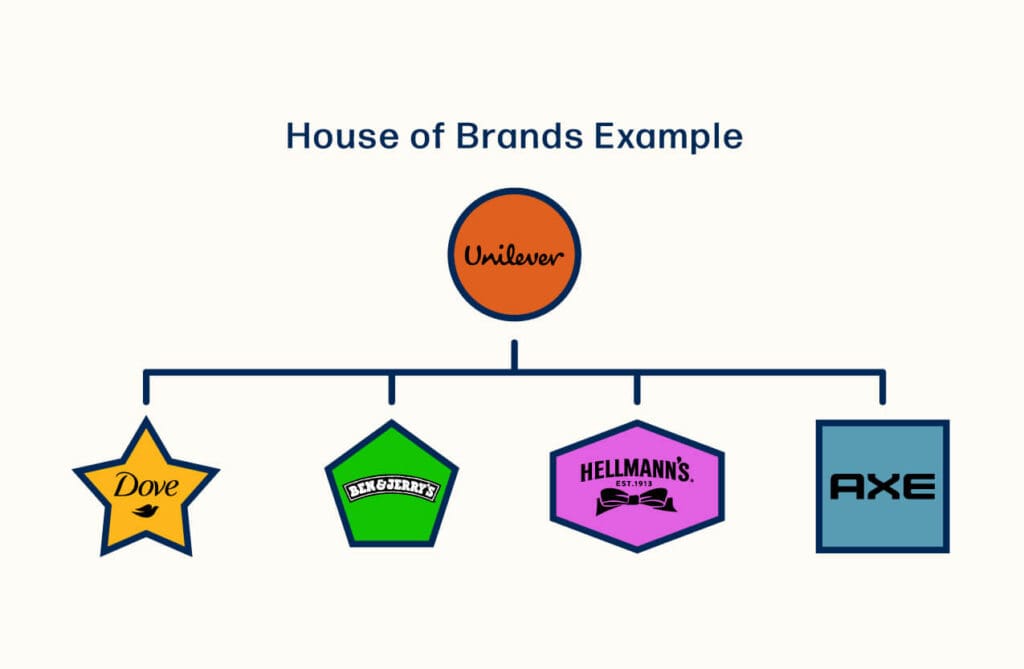
- House of Brands. Consider investing in and maintaining a legacy brand that has a healthy position and identity in its respective market/category. In this scenario, a parent brand manages a mixed portfolio of unique brands, typically due to its equity and status as a strong brand in its category.
Example: Unilever is an example of a house of brands portfolio strategy. Unilever is a parent brand, and underneath its umbrella is a collection of distinct brands (Dove, Ben & Jerry’s, Hellmann’s, etc.) that have standalone equity.
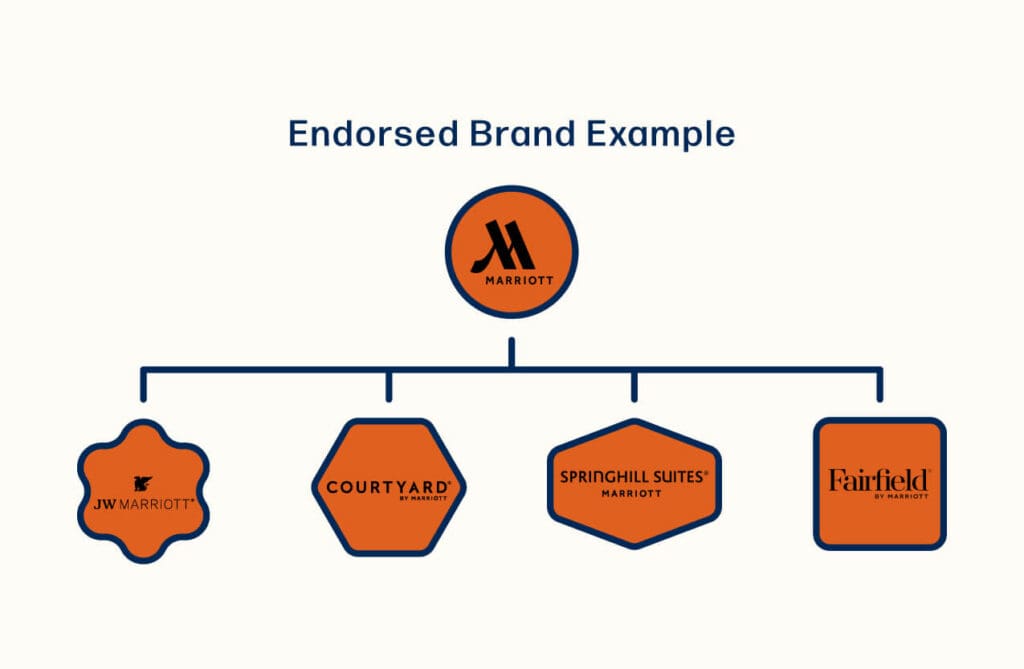
- Endorsed Brand. In this scenario, the acquired brand maintains its identity, and the parent company endorses it. This is an ideal strategy for brands with strong equity where it would be beneficial to leverage the parent brand’s influence.
Example: Marriott is an example of a portfolio using an endorsed brand strategy. The master brand (Marriott) is leveraged in some fashion across its sub-brands (Courtyard by Marriott, JW Marriott and SpringHill Suites, etc.).
- Hybrid Brands. Product-specific branding utilizes the acquired brand’s product(s) as an expansion point for future growth opportunities. This approach includes a combination of branded house and house of brands, providing better flexibility for all their brands. A company might want to maintain independent brands for some offerings and leverage the master brand for specific brands.
Example: Coca-Cola is an example of a hybrid brand. While it maintains master brand connections for brands like Coca-Cola, Coca-Cola Zero and Diet Coke, it also has independent brands like Fanta, Sprite and Dasani.

These are just some of the many different brand portfolio strategies. Other strategies can be considered based on the specific complexities and unique situations of the acquisition.
Are you about to acquire a new brand and you’re not sure how to integrate it into your portfolio? Jump works with clients of all shapes, sizes and situations, and we can help you navigate this process. Contact us to learn how we can collaborate to help you develop a strategy that will take your brand portfolio to the next level.